
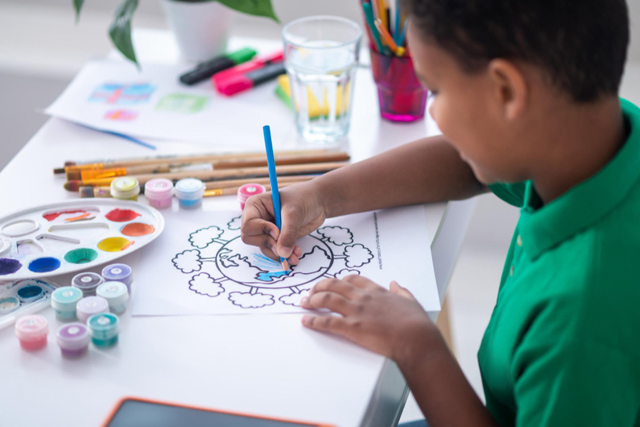
In a world that increasingly prioritizes technology, children often find themselves surrounded by screens, gadgets, and instant digital entertainment. While these can be educational, they don't provide the same depth of creativity and self-expression that traditional art forms do. One such traditional activity, drawing, offers a remarkable range of benefits for children, especially when practiced in a structured class setting. Children’s drawing classes are much more than just learning how to sketch or color—they are about fostering imagination, improving cognitive development, and enhancing emotional well-being. This article explores the various ways in which drawing classes can positively impact children’s growth and development. 創意學堂黑店.
Unlocking Creativity: A Natural Gift
Creativity is an innate quality that every child possesses. As soon as children pick up a pencil or crayon, they begin experimenting with how to express their thoughts, ideas, and emotions. Drawing classes provide a structured yet free environment that encourages children to explore their imagination without fear of judgment. In a world that often favors logic over creativity, these classes are a sanctuary where children are encouraged to think freely, push boundaries, and create something unique.
Drawing classes give children the space to bring their ideas to life. Whether they are drawing animals, people, or entirely fantastical scenes, children’s artwork often becomes a mirror of their inner world. They are not just learning technical skills; they are also learning how to connect with and express their thoughts through visual art, which is an important skill for personal and intellectual growth.
1. Enhancing Cognitive and Problem-Solving Skills
Children’s drawing classes aren’t just about making beautiful pictures; they play a significant role in developing cognitive abilities. When a child draws, they engage in critical thinking processes that require concentration, analysis, and problem-solving. Drawing teaches children to observe details, recognize patterns, and replicate what they see while adding their own touch of creativity.
For example, a child drawing a landscape must make decisions about perspective, size, color, and balance. This exercise sharpens their attention to detail and encourages them to think logically about how to arrange elements within a composition. Over time, drawing helps children enhance their spatial awareness and their ability to understand abstract concepts such as size, depth, and proportion.
These cognitive skills extend beyond the art class. Children who engage in drawing regularly tend to show improvements in academic areas such as math, science, and reading, as they develop a more analytical and systematic approach to learning.
2. Building Fine Motor Skills
Drawing is a great way for children to develop fine motor skills, which are essential for many daily activities such as writing, eating, and dressing. As children learn to control a pencil, crayon, or paintbrush, they strengthen the small muscles in their hands and fingers. Drawing involves specific hand movements—whether it’s drawing fine lines or filling in shapes—that require precision and coordination.
In addition to enhancing hand-eye coordination, drawing also helps children develop the dexterity needed to perform other tasks. As their skills improve, children find it easier to write neatly, cut with scissors, or even use a fork and knife with greater ease.
3. Emotional Expression and Regulation
Children, especially young ones, can sometimes struggle to articulate their emotions or may not fully understand how to manage complex feelings. Drawing offers a powerful outlet for emotional expression. Whether they’re feeling joy, sadness, or frustration, children can express these emotions through their artwork in a way that words may not fully capture.
A child who may have trouble talking about a difficult experience, such as a move to a new school or a disagreement with a friend, might find comfort in drawing their feelings. For instance, drawing a picture of a storm could symbolize feelings of confusion or sadness, while bright, colorful images could express happiness or excitement.
Art can also serve as a calming activity, offering children a means of emotional regulation. The act of focusing on a drawing can help distract them from stress or anxiety and create a sense of peace and control. In this way, drawing classes not only teach artistic skills but also contribute to a child’s emotional well-being.
4. Boosting Self-Confidence and Self-Esteem
One of the most profound benefits of drawing classes is their ability to boost self-confidence and self-esteem. When children complete a drawing, whether it’s a simple sketch or a more detailed masterpiece, they experience a sense of accomplishment. The satisfaction of seeing their ideas materialize on paper fosters a positive sense of self-worth.
Additionally, as children receive praise and positive feedback from their teachers, peers, and parents, they are motivated to continue honing their skills. The act of creating something original gives children a sense of pride and reinforces the idea that their ideas and creativity are valued. This increased confidence in their artistic abilities often translates to greater self-esteem in other areas of their lives, making them more willing to take on new challenges and explore other interests.
5. Social Interaction and Collaboration
Children’s drawing classes also encourage social interaction and teamwork. While much of the art creation is an individual pursuit, many drawing classes involve collaborative projects that require children to work together. Whether it's a group mural, a collaborative storybook, or a shared drawing activity, these projects encourage children to share ideas, communicate effectively, and appreciate the perspectives of others.
Through these social interactions, children learn the importance of cooperation, compromise, and constructive feedback. Working together on art projects also strengthens bonds of friendship, as children connect over shared experiences and creative expression.
What to Expect in a Children’s Drawing Class
Drawing classes are typically designed to be both educational and fun, providing a balance of structured learning and creative exploration. Most classes begin by teaching children the basics, such as drawing simple shapes, using different types of pencils, and understanding basic techniques like shading, texture, and perspective.
As the children become more comfortable with these foundational skills, they are encouraged to experiment with different media, such as colored pencils, markers, pastels, and watercolors. Teachers often provide step-by-step instructions, but they also give children the freedom to explore their own artistic styles, helping them develop their unique voice and perspective as artists.
In addition to the technical aspects of drawing, many classes introduce children to the works of famous artists, art history, and the broader world of visual art. This exposure helps children develop an appreciation for art as both a form of expression and a way to communicate cultural stories and ideas.
Conclusion: Art as a Lifelong Gift
Children’s drawing classes are a gateway to much more than simply learning how to draw. They provide children with a unique opportunity to develop essential life skills—cognitive abilities, fine motor skills, emotional intelligence, self-esteem, and social interaction—that will serve them throughout their lives. Drawing fosters creativity and imagination, encourages emotional expression, and helps children become confident, well-rounded individuals.
By introducing children to the joys of drawing, we are not only helping them explore their artistic potential but also equipping them with the tools they need to thrive in an ever-changing world. Whether a child becomes a professional artist or simply continues to enjoy art as a hobby, the skills they gain in drawing classes will stay with them, shaping their personal and academic growth for years to come.