
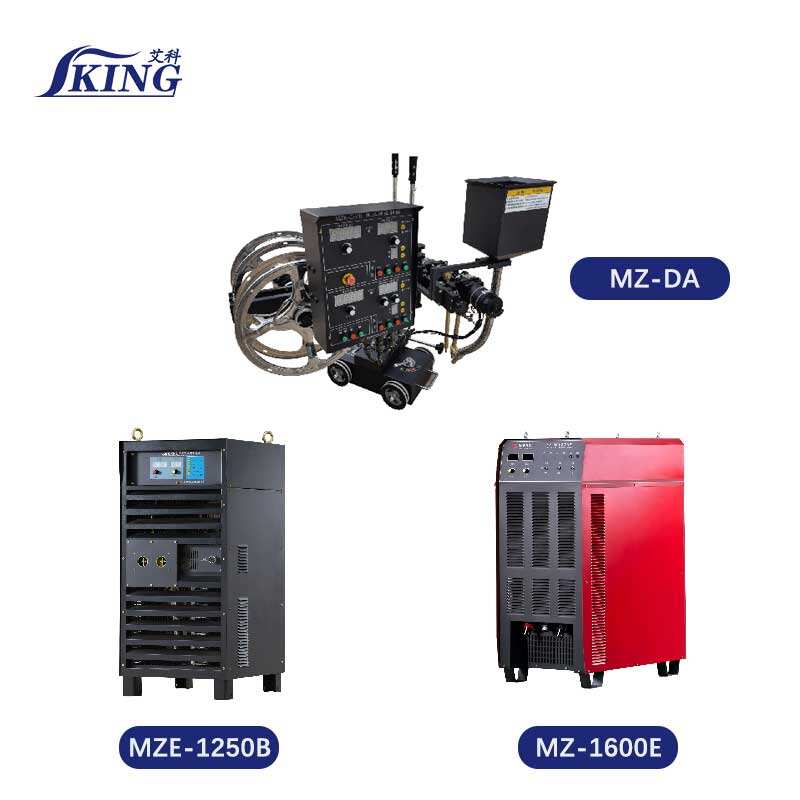
Welding has long been a cornerstone of industrial manufacturing, joining materials for everything from construction to automotive production. As industries continue to evolve and demand for precision, strength, and speed increases, advanced welding technologies have emerged to meet these challenges. Here’s a look at some of the most recent innovations and techniques in global industrial welding that are shaping the future of manufacturing.
1. Laser Welding: Precision at Its Finest
One of the most notable advancements in industrial welding is the rise of laser welding. Laser technology uses focused light to melt and join materials with extreme precision. This process allows for narrow weld seams, minimal heat distortion, and faster processing speeds compared to traditional welding methods like MIG or TIG welding.
Laser welding is particularly beneficial in industries such as aerospace, automotive, and electronics, where high precision and minimal post-weld cleanup are essential. Newer developments in fiber laser welding have further enhanced its speed and power, offering greater penetration and efficiency for both thin and thick materials. Its ability to be integrated into automated systems makes it a popular choice for mass production.
2. Friction Stir Welding (FSW): Revolutionizing Solid-State Welding
Friction Stir Welding (FSW) is an advanced solid-state welding technique that has been gaining traction across various industries. Unlike traditional welding methods that rely on melting the materials, FSW uses frictional heat to soften the materials, allowing them to be joined without reaching their melting point. This results in less distortion, improved material properties, and a stronger bond.
FSW is particularly useful in applications that require joining high-strength materials, such as aluminum alloys used in the aerospace and automotive industries. The technique is ideal for joining thick sections of metals that would be difficult to weld using conventional methods. Moreover, FSW eliminates issues like porosity and cracking, common challenges in conventional fusion welding.
3. Additive Manufacturing and 3D Welding: A New Frontier
Additive manufacturing, also known as 3D printing, has found its place in industrial welding, merging the worlds of traditional welding and new-age technology. 3D welding involves the use of wire or metal powder that is added layer by layer to build up a component. This technique has the potential to revolutionize industries by enabling the rapid prototyping and repair of metal components, as well as creating complex geometries that are impossible with conventional methods.
Industries such as aerospace, automotive, and energy are particularly benefiting from this technology, as it allows for on-demand, highly customized parts that reduce material waste and manufacturing time. The technique also offers the ability to repair damaged parts that are no longer in production, significantly extending the life of expensive equipment.
4. Robotic and Automated Welding Systems
Automation is taking over Wind Energy , and robotic welding systems are at the forefront of this revolution. Automated welding systems, which use robotic arms and AI-driven algorithms, provide increased efficiency, higher quality, and greater consistency in production. These systems are used across various sectors, from automotive assembly lines to shipbuilding.
Recent advancements in AI and machine learning are enabling robots to adapt to different welding conditions, optimize parameters in real-time, and detect defects early in the process. This level of automation significantly reduces human error, improves safety by reducing operator exposure to dangerous conditions, and cuts down on labor costs.
5. Underwater Welding: Innovations for Subsea Applications
Underwater welding has seen significant improvements in recent years, especially with advances in welding equipment and techniques that can withstand the unique challenges of working beneath the surface. This type of welding is used for repairing offshore oil rigs, ship hulls, and underwater pipelines. New developments have led to more reliable and efficient underwater welding techniques, such as hyperbaric welding, which takes place in a pressurized environment to prevent weld defects caused by water exposure.
New materials and specialized tools are being developed for underwater welders, enhancing the safety and quality of their work. Additionally, advancements in robotic-assisted underwater welding are making it easier to conduct complex repairs in hazardous or hard-to-reach locations.
Conclusion
As industries across the globe demand more efficient, precise, and cost-effective welding solutions, these advanced techniques are playing an increasingly critical role. From laser and friction stir welding to the integration of robotics and additive manufacturing, the welding industry is entering a new era of innovation. These advancements not only enhance productivity but also open up new possibilities for welding in challenging environments, pushing the boundaries of what’s possible in industrial manufacturing. As the technology continues to evolve, the future of welding looks brighter and more exciting than ever before.